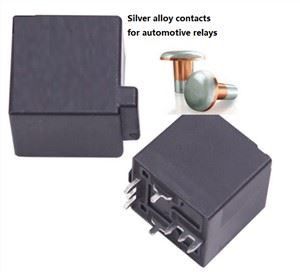
Although silver is inert in an organic atmosphere, it is easily corroded and vulcanized by a sulfur-containing atmosphere. Improving silver's resistance to sulfidation is also through alloying, such as adding gold and palladium to reduce the rate of silver sulfide film formation. In addition, many base metal elements such as manganese, antimony, tin, germanium, arsenic, gallium, indium, aluminum, zinc, nickel, and vanadium can also be added to silver to improve its sulfur resistance. There are many types of silver-based electrical contact materials, in the alloyed state, and they can also be made into fake alloys by powder metallurgy. Their purpose is to strengthen, wear and improve electrical contact performance. For different purposes, often add multiple components. In alloy-type low-power sliding contact materials, manganese, iridium, bismuth, aluminum, lead or thallium are often added to increase wear resistance. Silver-based alloy brazing filler metal is the type of brazing filler metal with the most brands, the most widely used and the largest dosage in the precious metal brazing filler metal. The main requirements for brazing alloys are welding temperature, melting point, wettability and welding strength. Silver alloys as brazing filler metals are often added with alloying elements such as copper, zinc, cadmium, manganese, tin, and indium to improve welding performance.
Silver will absorb a lot of oxygen in the molten state. At room temperature, silver hardly absorbs oxygen. As the temperature increases, the solubility of oxygen in silver increases little until the temperature reaches the melting point. In the molten state, silver can dissolve oxygen more than 21 times its own volume. Properties cause problems for smelting and casting. It makes the alloy easy to volatilize at high temperature or cause a lot of loss due to splashing during high temperature cooling. Generally, there is not enough deoxidizer. If it is not protected during smelting, it is easy to accumulate oxygen and oxidize copper. Jewelry castings are prone to defects such as pores and oxide inclusions. Copper oxide in castings can cause two types of problems. One is copper oxide inclusions in the entire casting, forming hard spots when approaching the surface, protruding on the polished surface, and the other is copper oxide inclusions near shrinkage holes. There are gray cloud-like points on the polished surface, which are deep and difficult to remove. If the silver melt is left unprotected or severely overheated for a long time, the copper will be seriously oxidized, forming a viscous liquid surface, reducing the fluidity of the metal liquid, making some small parts of the casting incompletely filled, and often appearing on the surface near the under pouring red. In order to prevent the accumulation of oxygen in the silver liquid, the key is to avoid the metal liquid contacting the atmosphere as much as possible during the melting or casting process. The following methods can be used:
(1) A vákuumolvasztás elektromos kemencés olvasztásra használatos, vagy inert gázt, mint például argont vagy nitrogént használnak védelemre {1} Eltávolítják az oxigént az olvasztókamrából, és csekélyebb mértékben oxidálják a fém folyadékot;
(2) A redukáló lángokat gázlángos olvasztáskor kell használni. Az elektromos kemencében történő olvasztás során néha redukáló lángokat adhatunk a teknő szájához, hogy lefedjük az olvadt fémet;
(3) Hintázzon zúzott faszénnel vagy vízmentes bórsavnál a fémfolyadék felületére. Ezek a felületen lebegnek az ezüst folyadékon, hogy megvédjék az ezüst folyadékot két szempontból. Az egyik, hogy gátat alkossanak a fémfolyadék és a levegő között, a másik pedig, hogy csökkentsék a réz-oxidot. Ez a módszer nem alkalmas centrifugákon való használatra, de jól működik kézi üzemeltetésű kötélporszívó gépeken.
(4) A fenti módszerben fontos a folyékony fém védelmének megerősítése is a öntési folyamat során, különösen, amikor szívó kábelgéppel öntünk, mivel azt vákuum alatt kézi öntéssel végzik, szükséges a folyékony fém áramlásának védelme, általában egy csökkentő láng használatával. Amikor a gipszforma a helyére kerül, a lángot bekapcsolják, és a lángnak a forma kapuját kell lefednie, hogy a levegő eltávolítható legyen a formából.